


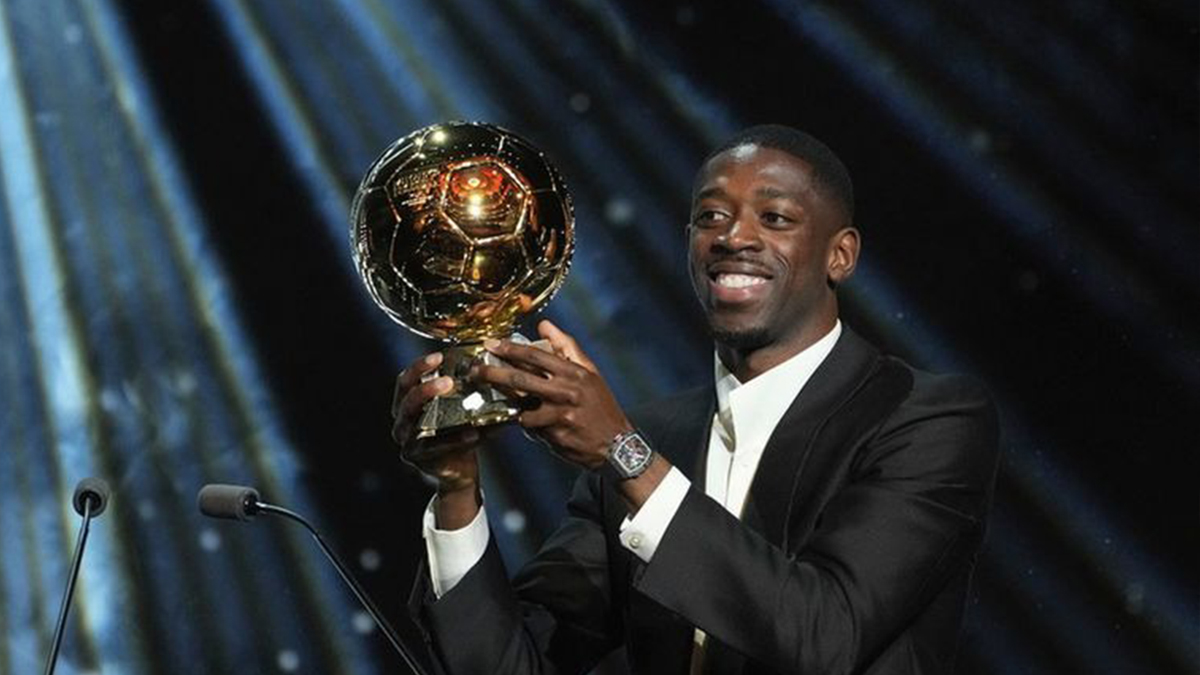
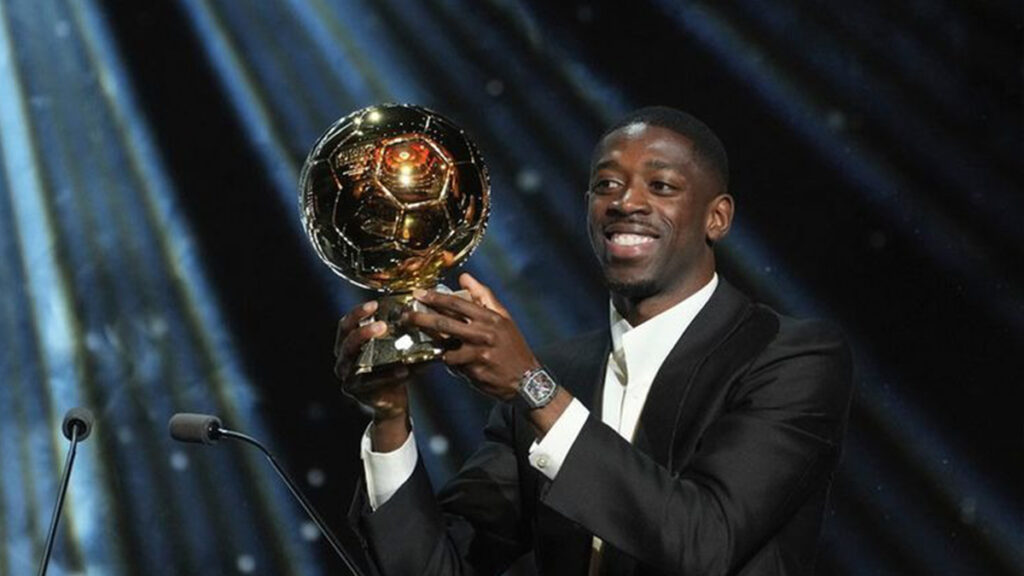
In an era where football is often reduced to numbers, formations, and expected goals, the 2025 Ballon d’Or has reminded the world of the value of instinct, creativity, and chaos. Ousmane Dembélé, the Paris Saint-Germain winger once known more for injuries than consistency, was crowned the best footballer in the world on September 22, 2025, during the Ballon d’Or ceremony held at Théâtre du Châtelet in Paris.
The win was officially announced by Brazilian legend Ronaldinho — himself a symbol of joyful, expressive football — who called Dembélé’s name with a knowing smile. The 28-year-old Frenchman rose from his seat, embraced his PSG teammates and runner-up Lamine Yamal, and accepted the golden ball from Ronaldinho himself.
📌 Source: Detik.com – Ronaldinho Umumkan Dembele Jadi Pemenang Ballon d’Or 2025
A Historic Season Sealed with Gold
Dembélé’s triumph was not merely symbolic. He earned the award by leading PSG to an unprecedented domestic treble — Ligue 1, Coupe de France, and Trophée des Champions — and, most importantly, the club’s long-awaited UEFA Champions League title.
Over the 2024/25 season, Dembélé appeared in 53 matches, scoring 35 goals and delivering 16 assists. His performances were decisive, flamboyant, and often breathtaking, echoing the street football style of his youth.
📌 Source: Detik – Tangis Haru Dembele Usai Menangi Ballon d’Or
Lamine Yamal: A Generational Runner-Up
Coming in second was 18-year-old Barcelona prodigy Lamine Yamal, who made history as the youngest ever to reach the Ballon d’Or podium. While Dembélé’s experience and silverware gave him the edge, Yamal’s talent, maturity, and vision have many convinced that his time will come soon.
According to ESPN, Yamal is “from a whole different universe.” His rise through Barcelona’s ranks has been meteoric, and despite his age, he has already become a leader for both club and country. His goal at UEFA Euro 2024 and the Champions League Goal of the Season (2024/25) were standout moments that defined his rapid emergence.
📌 Source: ESPN – Dembélé’s Ballon d’Or win feels like the dawn of a new era
More Than Stats: A Triumph of Style
What made this Ballon d’Or year special was not just the stats, but the statement. As ESPN’s Graham Hunter noted, both Dembélé and Yamal represent a style of football that is becoming rare in a data-driven era — spontaneous, unpredictable, and powered by intuition rather than instruction.
These players are “body-language liars” — athletes who manipulate defenders with feints, hip swerves, and quick bursts that defy conventional tactics. In a sport increasingly dominated by algorithms and structured pressing systems, their artistry is a refreshing throwback.
Vitinha Takes Bronze, but Deserves Applause
The third-place finisher, Vitinha, had an outstanding year in his own right. The Portuguese midfielder was a crucial figure in PSG’s midfield and played a key role in Portugal’s UEFA Nations League victory. His triple crown of trophies in club and international football would have been enough to win in any other year.
Yet, the artistry and storylines of Dembélé and Yamal were simply too compelling.
From Criticism to Crown
Dembélé’s journey has not been smooth. Once labeled inconsistent and injury-prone during his time at Barcelona, he often left fans and coaches frustrated. In 2021, then-Barça coach Xavi Hernández boldly told the club board: “I can make Dembélé the best player in the world.” Many laughed. In 2023, he left for PSG — a move seen by some as a last chance. Two years later, Xavi’s words have proven prophetic.
Dembélé’s transformation from underachiever to Ballon d’Or winner is not just about goals and assists. It’s about perseverance, mental growth, and rediscovering joy in his game.
A Shared Legacy with Yamal
Though they played together only briefly at Barcelona, the connection between Dembélé and Yamal runs deeper. Both were shaped by street football — concrete playgrounds, scraped knees, and one-on-one showdowns. Both were mentored by Xavi. And both now represent a new wave of players who bring back unpredictability and flair to the elite level.
As Hunter put it, “They are soccer’s Rhinestone Cowboys” — glitzy, unpredictable, and impossible to script.
The Final Word
The 2025 Ballon d’Or may be remembered not just as the year Dembélé won, but as the moment football tilted back toward artistry. In a game where precision often outweighs passion, Dembélé’s victory sends a signal: joy still matters.
Football fans don’t just want efficiency — they crave magic. And in 2025, Ousmane Dembélé delivered just that.