


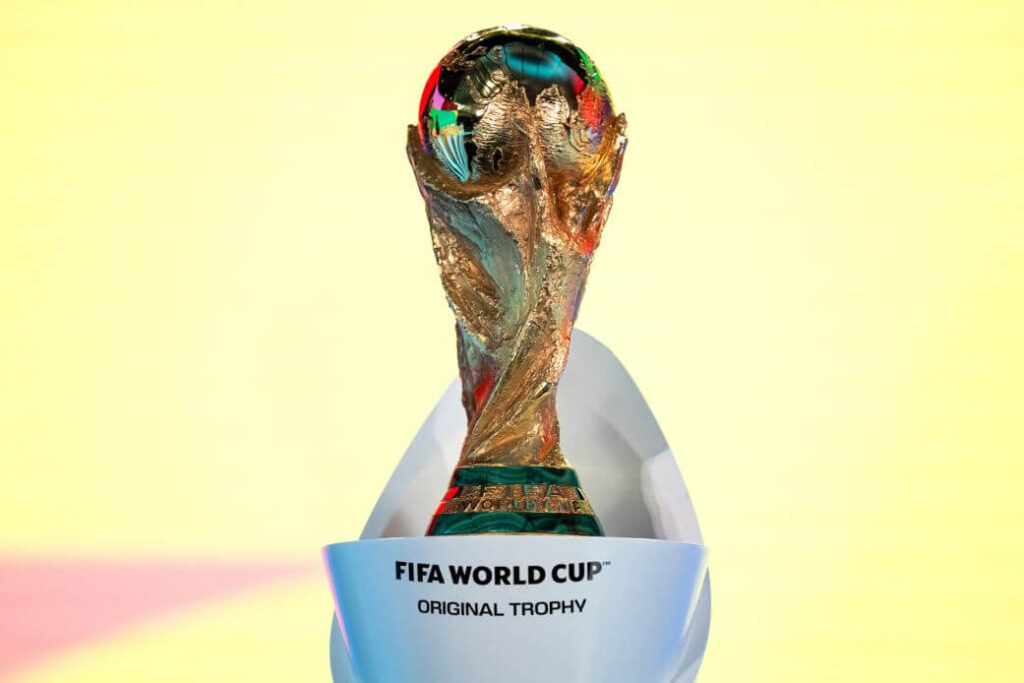
FIFA will implement a strict clean venue policy during the 2026 World Cup, requiring all host stadiums to fully remove gambling-related branding and restrict competing commercial advertising across match venues.
The tournament, jointly hosted by the United States, Canada, and Mexico, will run from 11 June to 19 July 2026 and feature 104 matches across 48 teams.
Stadium Naming Rights Temporarily Removed
Under the new rules, FIFA will enforce the removal of corporate stadium names during the tournament. Most venues will be renamed using neutral geographic titles—for example:
- AT&T Stadium → Dallas Stadium
- Hard Rock Stadium → Miami Stadium
- MetLife Stadium → New York–New Jersey Stadium
Only limited exceptions are expected, such as Mercedes-Benz Stadium in Atlanta, where structural constraints reportedly prevent full logo removal.
Betting and Corporate Branding Restricted
FIFA’s policy also targets existing commercial partnerships, including those linked to sportsbooks and betting companies such as Caesars, BetMGM, DraftKings, and FanDuel. All gambling-related signage in stadiums—including LED boards, VIP areas, and concourses—must be removed or concealed during the tournament.
The “clean venue” rules override existing contracts between venues and commercial partners, requiring full compliance well in advance of the event.
Stronger Controls on Officials and Match Areas
FIFA has also tightened restrictions on gambling sponsorship in officiating environments. Under Circular No. 1938, gambling branding is banned from:
- Referee kits
- VAR (Video Assistant Referee) rooms
- Match official review areas
The aim is to separate betting influence entirely from match operations and maintain perceived integrity throughout the tournament.
Betting Market Still Expected to Grow
Despite the restrictions on in-stadium advertising, industry forecasts still expect significant growth in betting activity during the tournament. Analysts project that U.S. wagering alone could exceed $4 billion, up from approximately $1.8 billion in 2022, driven largely by mobile sportsbooks and digital platforms.
Operators are expected to shift marketing away from stadium exposure toward apps, streaming, and online fan engagement, as legal betting markets continue to expand unevenly across host regions.
