


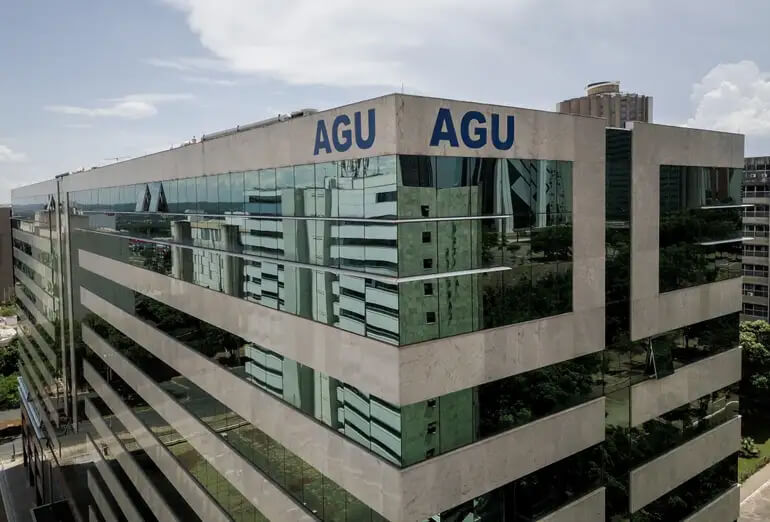
Brazil’s Attorney General’s Office (AGU) has asked the Supreme Federal Court (STF) to suspend a new law in Rio Grande do Sul that imposes strict restrictions on betting advertising. The AGU argues that the legislation may conflict with federal authority and existing national regulations.
The request was submitted as part of Direct Action of Unconstitutionality (ADI) No. 7971, a case originally filed by the National Association of Gaming and Lotteries (ANJL). The disputed law, Law No. 16.508/2026, is scheduled to take full effect on August 25, 2026.
The case could become an important test of the balance between federal and state powers within Brazil’s newly regulated betting market.
Law Introduces Strict Advertising Controls
The Rio Grande do Sul legislation establishes a series of advertising restrictions for licensed betting operators.
Among its requirements, gambling advertisements must display mandatory responsible gambling warnings. For example, notices must state that participation by individuals under 18 years of age is prohibited.
The law also limits audiovisual betting advertising to the period between 9:00 p.m. and 6:00 a.m. Furthermore, it prohibits promotional activity near schools, healthcare facilities, and locations where large numbers of minors are present.
The law grants enforcement powers to PROCON-RS, allowing authorities to impose sanctions ranging from fines and advertisement removals to website blocking measures and the potential suspension or cancellation of operating licenses for non-compliant operators.
State Defends Consumer Protection Measures
Supporters of the legislation argue that stronger advertising controls are necessary to protect consumers, minors, and vulnerable groups from gambling-related harm.
State authorities maintain that the measures fall within constitutional powers related to public health, consumer protection, and child welfare.
The law also introduces joint liability provisions covering betting operators, advertising agencies, media companies, and internet service providers involved in the distribution of prohibited gambling content.
Revenue from enforcement penalties would fund consumer protection programs and responsible gambling initiatives.
Federal Government Raises Constitutional Concerns
The Attorney General’s Office has challenged the legislation on several constitutional grounds.
Its primary argument is that regulation of commercial advertising falls under the exclusive legislative authority of the federal government. Meanwhile, according to the AGU, Brazil already has a comprehensive national framework governing betting advertising through Law No. 14.790/2023 and regulations issued by the Ministry of Finance.
The federal government argues that the Rio Grande do Sul law creates a separate and potentially conflicting regulatory regime. Rather than complementing existing federal rules, it could cause overlap.
Officials also highlighted differences between the state requirements and federal standards. These differences include more extensive warning obligations and additional restrictions on advertising practices.
Questions Over Federal Jurisdiction
The AGU further argues that betting activities fall within lottery-related regulation. Notably, this area is reserved exclusively for federal oversight by the Constitution.
Additional concerns relate to telecommunications and broadcasting regulation. The federal government claims that provisions restricting advertising schedules, blocking betting websites, and imposing obligations on internet service providers involve matters that are already subject to national regulation.
The filing also challenges the law’s joint liability provisions, arguing that they may interfere with federal civil and commercial law. According to the AGU, these provisions create obligations for private entities beyond those established at the national level.
Industry Warns of Regulatory Uncertainty
Beyond constitutional issues, the Attorney General’s Office has warned that allowing the law to take effect could create legal uncertainty for licensed operators.
Companies may be forced to navigate potentially conflicting federal and state requirements. As a result, compliance costs may increase and uncertainty around advertising practices may grow.
The federal government also expressed concerns that excessive advertising restrictions could unintentionally increase the visibility of illegal gambling operators. Consequently, consumers may become more likely to encounter unregulated platforms that are not subject to the same rules or consumer protection standards.
According to the AGU, maintaining the law before a final judicial ruling could undermine the uniformity of Brazil’s betting regulatory framework.
Supreme Court to Review Case
The Supreme Federal Court will now consider submissions from multiple stakeholders, including the federal government, ANJL, the Governor of Rio Grande do Sul, and the State Legislative Assembly.
Justice Cármen Lúcia has already referred the matter to the Prosecutor General’s Office for a formal opinion before the Court proceeds further.
The outcome could have significant implications for Brazil’s betting industry. In particular, this concerns whether individual states can impose advertising restrictions that go beyond federal gambling regulations.
As the country’s regulated betting market continues to evolve, the case is expected to become a landmark decision. This will likely shape the future relationship between state-level initiatives and national gambling policy.
