


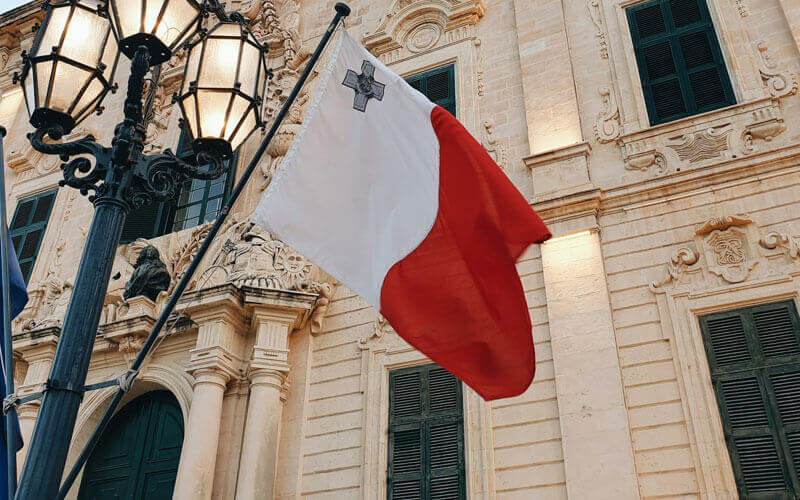
Malta will introduce significant reforms to its iGaming tax framework, updating both value-added tax (VAT) and gaming tax rules from 1 October 2026. The Malta Tax and Customs Administration (MTCA) and the Malta Gaming Authority (MGA) jointly announced the changes as part of a broader effort to improve clarity, predictability, and long-term competitiveness for gaming operators licensed in the jurisdiction.
Legal Notices 84 and 86 of 2026 formalise the reforms and aim to strengthen Malta’s position as one of the world’s leading regulatory hubs for online gaming.
VAT Rules to Clarify Gambling Exemptions
Under the planned amendments to the VAT Act (Cap. 406), Malta will clarify the scope of its existing VAT exemption for gambling suppliers, particularly in relation to sports betting and certain casino products. Furthermore, the changes will also introduce clearer guidance on how place of supply rules apply to these services.
According to the MGA, the objective is to ensure that the principle of taxation at the place of consumption is properly reflected in the legal framework. By refining the boundaries of the VAT exemption, the reform will also allow a “natural right of recovery” of eligible input VAT costs. This will support VAT neutrality and offer operators a more transparent mechanism for compliance. The regulator confirmed that the changes follow consultations with the industry.
Gaming Tax Framework to Be Simplified and Consolidated
Malta’s gaming tax structure will also be updated through amendments to the Gaming Tax Regulations (Subsidiary Legislation 583.10) issued under the Gaming Act (Cap. 583). The MGA stated that the revised model will introduce a more simplified and equitable approach for both land-based and online operators. It will cover operators offering qualifying gaming activities to players located in Malta.
The reforms will consolidate the current gaming tax and gaming device levy into a single streamlined gaming tax structure, classified by game type and mode of offering. The MGA said the redesigned framework aims to create a balanced overall impact on the gaming services sector. Moreover, the new structure will apply exclusively to gaming services provided within Malta’s territory.
Strengthening Malta’s Long-Term Competitiveness
The MGA described the combined reforms as a forward-looking policy move aimed at enhancing Malta’s fiscal resilience and regulatory clarity. Officials said the changes will provide operators with greater certainty and operational efficiency. At the same time, they will reinforce Malta’s reputation as a stable and internationally competitive base for gaming businesses.
The MTCA and MGA also confirmed that they will issue further guidance in due course to support smooth implementation and provide full clarity for operators ahead of the October 2026 rollout.
Malta Also Exploring Regulation of Prediction Platforms
Alongside the tax reforms, Malta is also evaluating the potential regulation of prediction platforms. Economy Minister Silvio Schembri said the government is considering a dedicated framework to address whether prediction-based products should be classified under gambling regulation or treated as a financial activity. He highlighted the sector’s growing global momentum. In addition, he mentioned its potential for innovation.
