


Brazil’s Science and Technology Committee (CCT) has approved legislation that would introduce major restrictions on betting advertising and sponsorships. In addition, the bill includes stronger consumer protections, product-risk controls and penalties for promoting unauthorized operators.
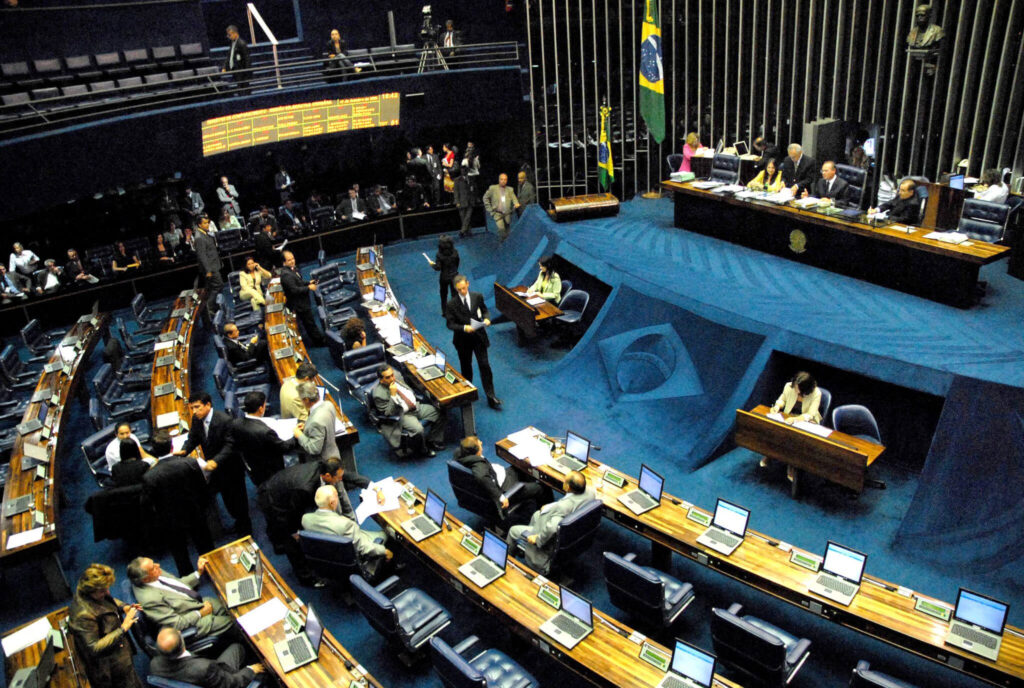
Bill 2.470/2026, authored by Senator Damares Alves and other senators, would amend Brazil’s fixed-odds betting framework to address concerns surrounding mental health, consumer protection and household finances. Furthermore, the committee also approved an urgency request for the bill to be considered by the Senate Plenary.
Broad Restrictions on Betting Advertising
The proposed legislation would prohibit direct and indirect betting advertising across a wide range of channels. These channels include television, radio, print, outdoor media, streaming services, podcasts, social networks, websites, apps and search engines.
The restrictions would also cover SMS, email, notifications, telemarketing, algorithmic advertising and behavioral profiling. The bill would also prohibit advertising through esports, electronic games, sports uniforms, affiliate content, tipsters, comparison websites and paid intermediaries.
Operators could not use bonuses, free bets, cashback, free spins or loyalty rewards to encourage player acquisition or retention. The bill would also prohibit marketing that suggests betting carries no risk, provides a source of income or helps consumers recover financial losses.
Sponsorship Rules Face Major Changes
The bill would further prohibit betting companies from sponsoring sports clubs, leagues, federations, competitions and broadcasts. Sponsorship of cultural and social initiatives would also be banned.
Naming rights, ambassadors and promotional partnerships involving athletes, influencers, artists and celebrities would also face restrictions. Existing sponsorship agreements would need to adapt or end within 24 months, while companies could sign new agreements only if those agreements expire within that period.
The bill would prohibit sponsorships involving minors, schools and youth sports. It would also prohibit associations with mental health, gambling disorder treatment, financial education and vulnerable-group protection.
Stronger Player Protection Measures
The proposal introduces extensive requirements for responsible gambling and player protection. Operators would need permanent age verification, cross-operator self-exclusion mechanisms, voluntary wagering and time limits.
Operators could not use information about self-excluded users or individuals receiving treatment to reactivate their accounts. The rules would also restrict operators from targeting players who show signs of risky behavior, significant losses or reduced activity.
Credit card betting and predictive models designed to identify periods of player vulnerability would be prohibited. At the same time, platforms would need permanent warnings covering compulsive gambling, indebtedness and asset loss.
High-Risk Products Could Face Restrictions
The legislation would establish a risk classification system for betting products based on several factors. These include rapid outcomes, continuous play, random results, near misses and mechanisms encouraging impulsive or increasing wagers.
Products would require prior assessment by a competent federal authority. In addition, high-risk products could face additional harm-reduction measures. Products considered excessively risky—including roulette, slot machines, crash games and simulated virtual sports—could be prohibited.
Platforms and media intermediaries would also be required to remove irregular advertising following official notification. However, journalistic, academic, artistic and opinion content would remain protected.
Criminal Penalties for Illegal Promotion
Promoting unauthorized betting operators could become a criminal offense punishable by one to five years in prison. Moreover, there would be increased penalties for influencers, athletes and other prominent individuals.
Violations of the wider betting framework would remain subject to Law 14.790/2023. This law allows fines of up to BRL2 billion (approximately US$392.8 million).
The bill would also introduce a 24-month cooling-off period between certain betting-sector positions and regulatory roles.
Brazil Betting Industry Faces Tighter Oversight
The proposed measures represent a significant potential shift in Brazil’s approach to betting advertising, sponsorship and consumer protection.
If approved by the Senate and subsequently enacted, operators and their commercial partners would face substantial changes to marketing, sponsorship, product design and player engagement strategies. Additionally, the legislation would also reinforce government oversight through anonymized data sharing, institutional cooperation and monitoring of betting-related impacts.
For Brazil’s regulated betting market, the next stage of the legislative process will determine how extensively these proposed restrictions reshape the country’s rapidly developing betting ecosystem.
