


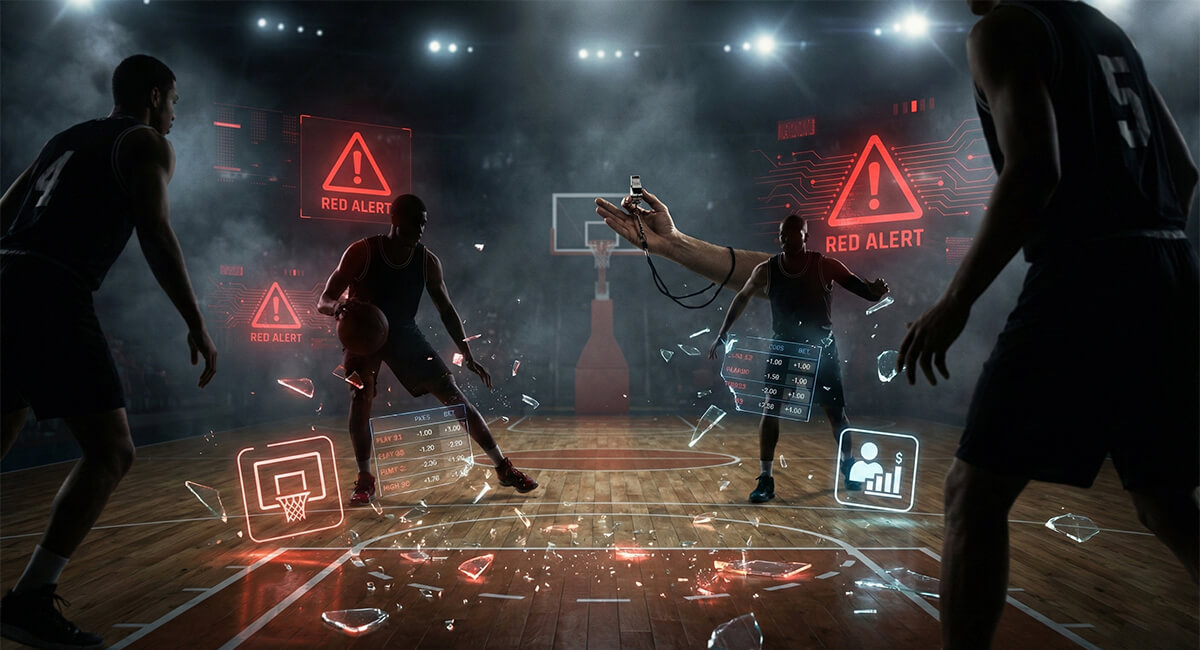
Following the revelation of a sweeping college basketball point-shaving scheme unsealed by federal prosecutors on January 15, 2026, the NCAA is once again urging state regulators to implement a total ban on individual player prop bets.
A Historic Integrity Crisis: 17 Teams Involved
The indictment alleges that 39 players across 17 different teams participated in fixed games, marking one of the largest integrity scandals to hit U.S. collegiate sports in decades.
Just hours after the news broke, NCAA President Charlie Baker called for a nationwide prohibition on individual player prop bets and similar wagers—such as “first-half unders”—which are highly susceptible to manipulation. Baker argued that unlike full-game outcomes, prop bets can be influenced by a single missed shot or a strategic foul, lowering the barrier for bad actors to fix results.
Slow Regulatory Adoption
Despite the NCAA’s repeated warnings since 2023, the regulatory response has been fragmented. Currently, only Ohio, Vermont, Maryland, and Louisiana have enacted restrictions preventing operators from offering college athlete prop bets.
- Legislative Momentum: Baker noted in a letter to regulators that New Jersey is considering a ban on “micro-betting,” while Indiana is reviewing a bill to outlaw college prop bets specifically.
- Athlete Safety: A recent NCAA survey revealed that 36% of Division I men’s basketball players have faced harassment or abuse from bettors over the outcome of their wagers.
Lessons from the Professional Ranks
The NCAA highlighted that integrity risks are not confined to the collegiate level, citing high-profile incidents in professional leagues:
- NBA: In April 2024, Jontay Porter received a lifetime ban for intentionally exiting games early to ensure the success of “under” prop bets.
- MLB: Following allegations of pitch manipulation for bribes involving Cleveland Guardians players, MLB mandated a $200 maximum bet on individual pitch markets for its partner sportsbooks.
Industry Insight: The NCAA’s Independent Stance
Unlike major professional leagues (NFL, NBA, MLB) that have formed lucrative commercial partnerships with sportsbook operators, the NCAA has steadfastly refused to partner with the betting industry.
This latest push is part of a broader strategy to protect game integrity. Just one day prior, Baker sent a separate letter to the Commodity Futures Trading Commission (CFTC), urging them to halt prediction markets tied to collegiate sports. For the NCAA, the line is clear: unchecked micro-betting markets represent an existential threat to student-athlete safety and the spirit of the game.
