


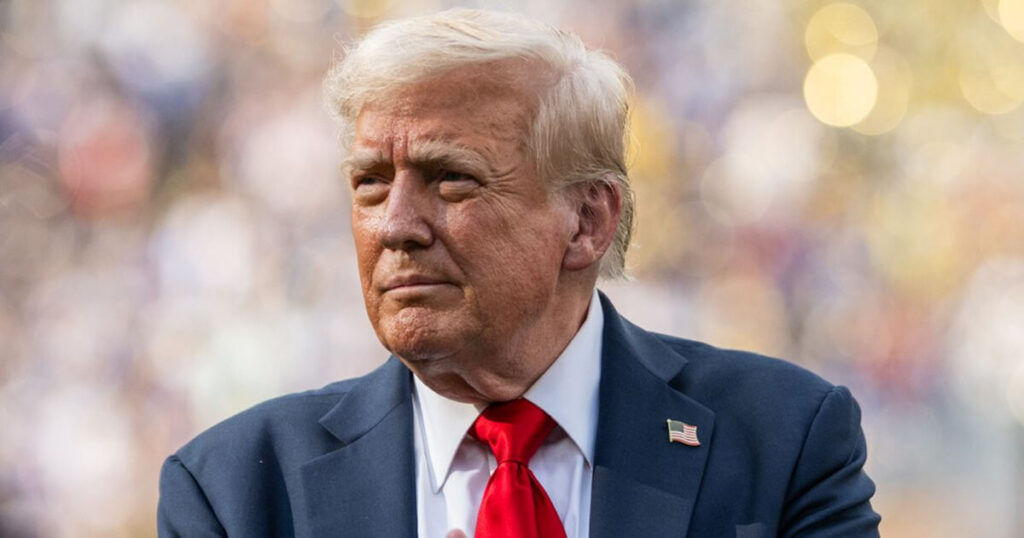
President Donald Trump has hinted that he may support a federal tax exemption on gambling winnings. He suggested the idea aligns with his broader agenda to reduce taxes on everyday income, including tips, overtime, and Social Security. Speaking to reporters aboard Air Force One, Trump said he will “have to think about” eliminating tax on gambling winnings. While he did not make a formal commitment, his comment signals that the White House is considering a major policy change. This could affect tens of millions of Americans who gamble each year.
Part of Trump’s Expanding “No Tax” Strategy
Trump made this statement just months after signing the One Big Beautiful Bill Act (OBBBA). The act removed federal income tax on tips and overtime and expanded relief for some Social Security and retirement income. Supporters argue that the bill allows Americans to keep more of what they earn. Adding gambling winnings to that list would extend this philosophy into commercial gaming. This is one of the fastest-growing sectors in the U.S. economy. U.S. commercial gambling revenue reached a record $110.3 billion in 2024. Survey data suggest that roughly 60% of U.S. adults gambled in the past year. So any tax change could impact a wide range of players.
Current IRS Rules on Gambling Winnings
Currently, the IRS taxes all gambling winnings, whether they come from casinos, sportsbooks, lotteries, bingo, raffles, horse racing, or game shows. Casinos and other payers must issue a W-2G form for wins of $600 or more when the payout is 300 times the original stake. This applies for slot and bingo wins over $1,200, keno wins over $1,500, and poker-tournament prizes above $5,000.
For larger prizes over $5,000, operators typically withhold 24% for federal income tax. They may withhold up to 28% or more if the winner does not provide a valid Social Security number. Gamblers must report all winnings as “other income” on Form 1040. They can deduct losses only up to the amount of reported winnings if they itemize.
Starting in 2026, the OBBBA will cap loss deductions at 90% of gambling income. Granting a federal exemption would break decades of precedent as the IRS steps up enforcement in the gaming sector.
Experts Weigh In: Revenue Losses and Industry Impact
Fiscal experts closely watch any proposals and revenue estimates. Analysts note that with U.S. commercial gaming revenue exceeding $100 billion annually, even modest effective tax rates generate several billion dollars in revenue. Critics argue that exempting gambling income could encourage heavier play. They say it may send the wrong message amid rising problem gambling, particularly among young men who use 24/7 sports betting apps. Observers also warn that the policy may benefit higher-income players more than casual lottery or scratch-card buyers. Casino and sportsbook operators generally prefer clear and predictable tax rules. A federal exemption could make regulated play more attractive compared with offshore or illegal sites. However, it would not change the operators’ corporate tax obligations.
No Formal Proposal Yet
For now, Trump’s remarks act as an early signal rather than a formal proposal. Congress has not received any draft legislation. The White House has not released cost estimates or a timeline for a “no tax on gambling winnings” measure. Any concrete plan would need Congressional approval. Some Republican fiscal hawks worry that additional tax cuts could worsen the federal deficit. Meanwhile, Democrats are likely to criticize a gambling exemption as a giveaway benefiting wealthier players. Once introduced, the Treasury Department and the Joint Committee on Taxation will provide detailed revenue projections and distributional analyses. These will shape the political debate.
Conclusion: A Potential Shift in Federal Tax Policy
Although Trump has not announced a definitive policy change, his comments suggest a potential shift in federal tax treatment for gambling. Such a move could reshape player behavior, affect the gaming industry, and reduce federal revenue. It sets the stage for a contentious discussion in Washington.
