


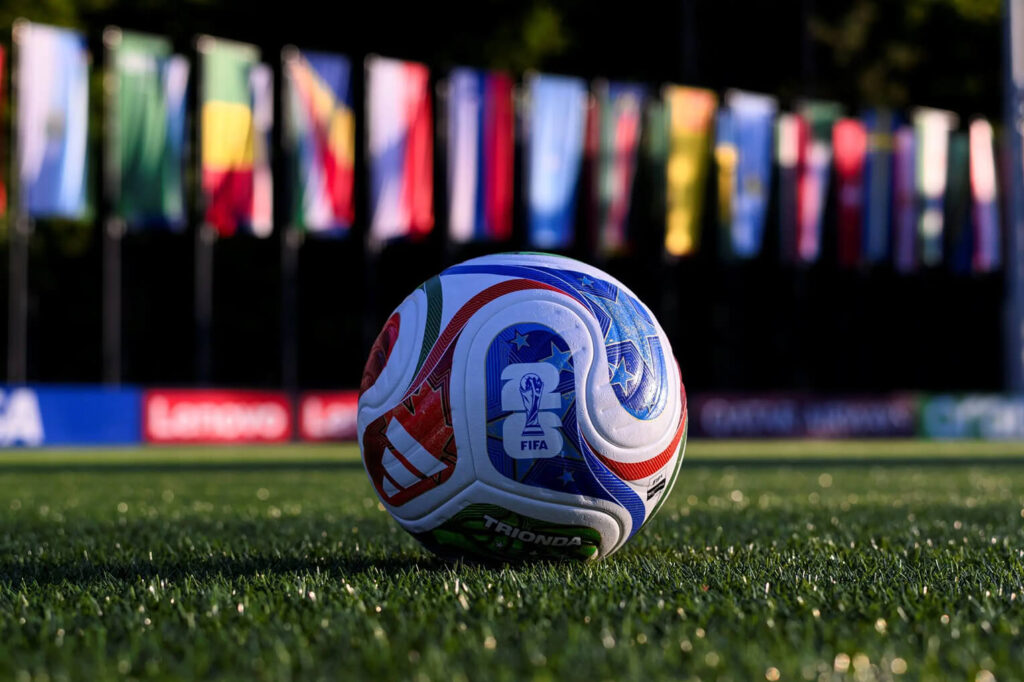
The 2026 FIFA World Cup could become the largest betting event in history, with global wagering projected to exceed $50 billion. Sportsbooks and prediction markets are preparing for unprecedented betting activity.
The tournament, which opened in Mexico City and concludes six weeks later at MetLife Stadium in New Jersey, features an expanded format of 48 teams. These teams will compete across 104 matches, which is 40 more than the 2022 World Cup.
According to Macquarie analyst Chad Beynon, total betting volume could surpass $50 billion, up from more than $35 billion during Qatar 2022. The growth is expected to be driven by the larger tournament format. Additionally, favorable viewing times across North America and broader access to legal sports betting in the United States will contribute.
Operators Positioned for Growth
Macquarie forecasts the World Cup could increase operator EBITDA by between 2% and 5% in 2027. Companies that have strong soccer audiences, international exposure, and cross-selling capabilities are expected to benefit the most.
Among the firms highlighted as potential winners are Flutter Entertainment, Super Group, Rush Street Interactive, Genius Sports, and Sportradar.
Flutter CEO Peter Jackson emphasized the scale of the tournament’s global audience.
“We think the Super Bowl is big here in America. You might have 200 million people watching it.”
“Last time, when the World Cup Final was played in Qatar, 1.5 billion people watched the final. Five billion people watched the whole competition, so this is massive.”
U.S. Betting Market Set for Record Handle
Deutsche Bank estimates that betting handle in the United States alone could reach approximately $3.3 billion during the tournament.
FanDuel is projected to generate around $1.3 billion in wagers, followed by DraftKings at $1.1 billion. BetMGM could attract approximately $250 million in handle. In addition, Caesars Sportsbook and Penn Entertainment’s theScore Bet are expected to generate about $120 million and $83 million respectively.
To capitalize on growing demand, operators are significantly expanding their football betting offerings. For example, Caesars Sportsbook is providing ten times more World Cup betting markets than it did during the 2022 tournament. These include same-game parlays, live betting options, and soccer-specific products.
Dominic Hammond, Senior Vice President of Sports at Caesars Digital, said a successful run by the U.S. Men’s National Team could further accelerate betting activity.
“If the U.S. Men’s National Team makes a deep run, that’s when things could really accelerate, driving massive spikes in engagement and betting with each match.”
He also noted that increased parlay betting and tournament unpredictability could create significant swings in sportsbook profitability.
Prediction Markets Expand World Cup Offerings
Alongside traditional sportsbooks, prediction market platforms are positioning themselves to benefit from World Cup interest.
Kalshi has launched nearly 500 World Cup-related markets. In the meantime, Fanatics, FanDuel, and DraftKings have introduced prediction products in jurisdictions where traditional sports betting is unavailable.
According to Piper Sandler, Kalshi and Polymarket generated a combined $7 billion in trading volume, up 13% week-on-week. DraftKings reported annualized prediction market trading volume of $3.1 billion in May, representing a 34% increase from the previous month.
The rapid growth of the sector comes despite ongoing legal and regulatory disputes in several U.S. states. The Commodity Futures Trading Commission (CFTC) continues to maintain that event contracts fall under its regulatory authority.
Legal Betting Access Continues to Expand
The World Cup arrives at a time when legal sports betting has become significantly more accessible across the United States.
Approximately 65% of the U.S. population can now legally place sports wagers, compared with around 40% during the 2022 World Cup. This creates a much larger addressable market for operators.
The expanded availability of regulated betting products is expected to play a major role in driving overall wagering growth during the tournament.
Responsible Gambling Concerns Remain
While the industry prepares for record activity, responsible gambling advocates have raised concerns. These concerns focus on the impact of continuous betting opportunities throughout the six-week event.
A survey conducted by fraud prevention firm SEON found that licensed sportsbook apps remain the preferred betting channel for 29% of respondents, while 19% reported using prediction market platforms. Nearly one-quarter admitted opening multiple accounts to take advantage of promotional offers.
Matt Zarb-Cousin, co-founder of gambling-blocking technology provider Gamban, warned that the tournament schedule could intensify gambling-related risks.
“Betting apps are optimized for engagement; they want to keep their users in action for as long as possible so their gambling becomes habitual.”
“Fans will be bombarded with continuous advertising and inducements for frequent betting opportunities. For the gambling industry, the World Cup will be like March Madness on steroids.”
Betting Industry Faces Defining Moment
With more matches, larger audiences, expanded legal access, and growing participation from prediction market platforms, the 2026 FIFA World Cup is shaping up to be a defining event for the global betting industry.
Whether through traditional sportsbooks or emerging event-contract platforms, operators are preparing for what could become the most heavily wagered sporting tournament ever staged.
