


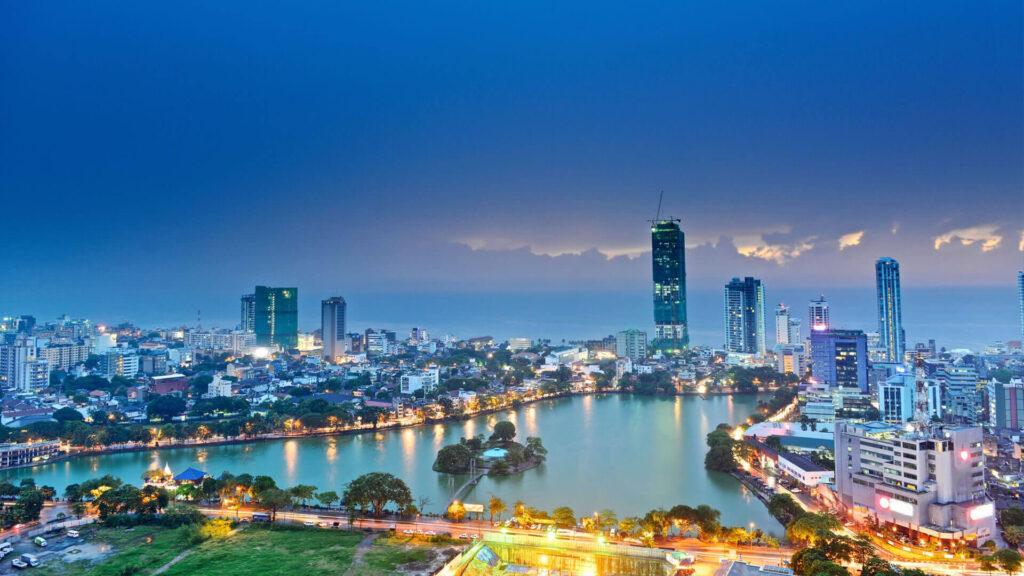
Sri Lanka is strengthening its response to illegal online gambling as businesses and workers formerly linked to Philippine Offshore Gaming Operators (POGOs) seek new operating bases. Colombo Port City has emerged as one potential destination as the Philippines continues to dismantle its offshore gambling industry.
Workers from China, the Philippines, Vietnam, and Cambodia have reportedly moved to Sri Lanka for online gaming jobs following the Philippines’ decision to shut down POGO operations.
Philippine President Ferdinand Marcos Jr. ordered POGOs to close in 2024 after years of criminal investigations and regulatory concerns. The government later reinforced the ban through the Anti-POGO Act of 2025.
Sri Lanka Strengthens Its Gambling Controls
Sri Lankan authorities have responded by blocking 122 online gaming platforms targeting local users and establishing a new gambling regulator. Further regulations are expected to cover operators in Colombo Port City as well as businesses operating elsewhere in the country.
Colombo Port City operates under a special economic framework designed to attract foreign investment. However, gambling businesses operating within the zone remain subject to Sri Lanka’s developing regulatory requirements.
The shift highlights a broader challenge for regulators. When authorities dismantle illegal gambling networks in one jurisdiction, businesses and workers may relocate to other markets. Consequently, countries such as Sri Lanka face additional challenges as they seek to prevent illegal operators from establishing new bases.
Philippines Expands Enforcement Against Former POGO Networks
The Philippines has expanded its response beyond shutting down POGO facilities. Authorities have introduced common enforcement procedures covering investigations, prosecutions, evidence handling, and asset preservation.
Moreover, agencies are using civil forfeiture to target properties and other assets linked to unlawful POGO activities. This approach allows authorities to disrupt the financial infrastructure supporting illegal operations rather than focusing solely on individual facilities.
Enforcement proceedings have included properties linked to offshore gaming businesses and foreign nationals accused of unlawfully acquiring land in the Philippines. Some seized POGO facilities have also been considered for government use, including accommodation for trafficking victims.
PAGCOR Tightens Controls on Legal Gambling
At the same time, Philippine authorities are strengthening controls over legal domestic online gambling.
The Philippine Amusement and Gaming Corporation (PAGCOR) has introduced stricter customer identification requirements, including verification before deposits. Advertising restrictions have also expanded as authorities seek to strengthen consumer protection.
In addition, regulators have introduced self-exclusion measures and a national problem gambling helpline. Broader restrictions on gambling advertising across broadcast platforms are also under consideration.
However, enforcement remains challenging because many illegal operators operate outside Philippine jurisdiction. Cyber authorities told lawmakers that they had blocked approximately 50,000 gambling websites, with around 95% to 97% operating from overseas.
As a result, Philippine officials have discussed stronger international legal cooperation to pursue illegal operators beyond the country’s borders.
Philippine Gaming Revenue Declines in 2026
The enforcement campaign comes as legal gaming revenue in the Philippines continues to decline.
PAGCOR reported PHP88.13 billion ($1.44 billion) in gross gaming revenue (GGR) during Q2 2026, representing a 20% year-on-year decline. First-quarter GGR had already fallen 15.9% year-on-year to PHP87.60 billion ($1.43 billion).
PAGCOR also reported a 26.7% decline in total revenue during the first half of 2026, attributing the decrease to slower earnings from gaming operations.
Overall, the developments in Sri Lanka and the Philippines demonstrate the wider regional challenges surrounding illegal online gambling. As enforcement increases in established offshore markets, operators and workers may seek alternative jurisdictions. Therefore, stronger cross-border cooperation, licensing controls, and financial enforcement will remain important for regulators attempting to prevent illegal gambling networks from simply relocating.
