


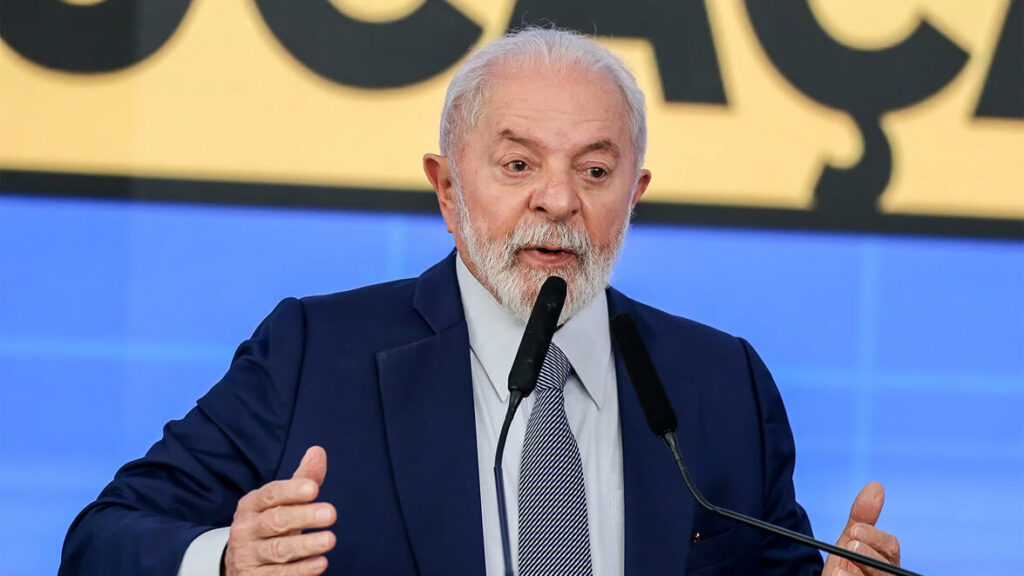
Brazilian President Luiz Inácio Lula da Silva has reiterated his opposition to online gambling. He describes betting as a social and public health concern. However, Lula acknowledges that he lacks the authority to unilaterally ban the industry.
The comments came during an appearance on a national television program. This happened as Lula continues his reelection campaign, where gambling regulation remains a prominent political issue.
Lula Calls for Stronger Controls
During the interview, Lula said he would favor shutting down betting platforms if the decision rested solely with the presidency. He added he would especially target those platforms that do not contribute positively to the country.
However, he emphasized that Brazil’s political system requires cooperation between the executive branch, Congress, and the judiciary. This limits the president’s ability to act independently on gambling legislation.
Lula also defended his decision to sign Brazil’s online betting law in late 2023. He argued that any presidential veto would likely have been overturned by lawmakers.
The president has repeatedly linked gambling to household debt and financial hardship. This position has resonated with parts of Brazil’s electorate, including influential religious groups.
Gambling Framed as a Public Health Issue
Lula described gambling addiction as a serious social challenge. He called for stronger consumer protection measures, greater financial education, and tighter oversight of the betting sector.
He claimed the government has successfully disrupted more than 90% of illegal betting operations. However, he acknowledged that a significant portion of the market remains outside the regulated framework.
The president also argued that gambling advertising should face the same regulatory scrutiny applied to other industries. He reinforced his broader concerns about the social impact of betting promotion.
Lawmakers Push for Advertising Ban
The debate intensified as the Mixed Parliamentary Front for the Promotion of Mental Health introduced legislation. This new law is aimed at prohibiting gambling advertising and sponsorship activities across sports and cultural events.
The initiative, known as “Brazil Against Bets,” was presented simultaneously in both chambers of Congress. It has gained support from lawmakers concerned about gambling-related harm and rising household debt.
According to Pedro Campos, public frustration with the volume of betting advertisements has become increasingly evident. Supporters of the proposal argue that gambling marketing contributes to excessive betting and broader social problems.
Industry Groups Oppose Restrictions
Industry associations have strongly criticized the proposed advertising ban.
The National Association of Games and Lotteries and the Brazilian Institute of Responsible Gaming argue that advertising plays a crucial role in distinguishing licensed operators from illegal platforms.
Industry representatives warn that restricting advertising could unintentionally benefit unregulated operators, which already account for a substantial share of Brazil’s betting market. Moreover, they contend that licensed companies are subject to consumer protection requirements, responsible gambling measures, age-verification controls, and tax obligations that illegal operators often ignore.
As Brazil’s regulated betting market continues to evolve, the debate over advertising, consumer protection, and the role of gambling in society is expected to remain a key political and regulatory issue. This will likely happen in the lead-up to the country’s next election.
